
Nusa Dua, Ungasan or Uluwatu: where on Bali's Bukit peninsula should you buy?
The Bukit peninsula is not one market. A district-by-district look at Bali's southern plateau — infrastructure, character, water, zoning — and how to match a location to the way you plan to own.
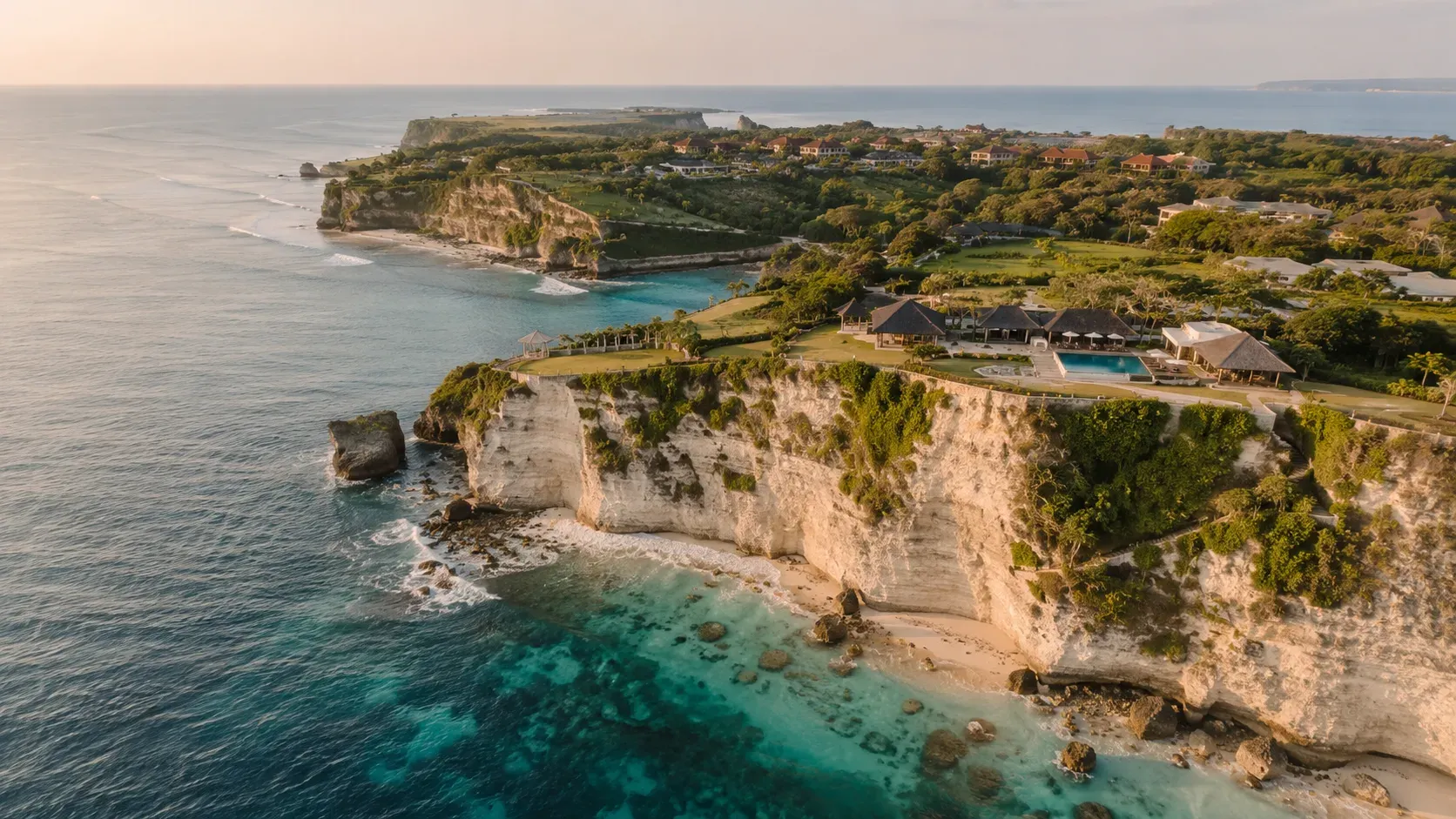
The Bukit is the limestone plateau that forms Bali's southern tip, beginning immediately south of Ngurah Rai International Airport. It is one peninsula but at least three distinct markets. Nusa Dua is the master-planned, institutionally managed enclave. Ungasan is the quiet clifftop residential zone. Uluwatu and the west coast are the open, surf-driven side. They differ in infrastructure, regulation, water supply and daily character, and the right answer depends on how you intend to use and hold the property, not on which beach photographs best.
What exactly is the Bukit?
"Bukit" means "hill" in Indonesian. The peninsula is a low karst plateau ringed by cliffs and white-sand beaches, a different geology from the volcanic black-sand coasts further north. It does not force the orographic rainfall that soaks the central highlands, and its porous limestone drains what does fall. That is why the south is markedly drier than Ubud, and also why it has no natural surface water to draw on. Both facts matter to buildings here: less standing moisture is kind to structures and finishes, while the absence of ground water makes every project's water engineering a first-order question.
Distances deceive on the plateau. Nusa Dua is connected to the airport by the Bali Mandara toll road, a reliable twenty minutes. The western and southern districts are served by ordinary surface roads, where the same distance takes forty-five minutes to over an hour depending on the season and the time of day. On the Bukit, minutes are a function of route, not kilometres. BIMC's hospital, one of the island's international-standard facilities, is on the Nusa Dua side.
The Bukit is only one part of the island. For Canggu, Pererenan, Ubud and Sanur, see the best areas to buy property in Bali.
Why is Nusa Dua different from everywhere else on Bali?
Nusa Dua is not an organically grown beach town. Its resort core is a planned tourism estate of roughly 350 hectares, developed from the early 1970s by the state tourism development corporation, today ITDC. Density is capped, building parameters are enforced, and the enclave is anchored by a strip of flagship international resorts: St. Regis, The Apurva Kempinski, Mulia and Grand Hyatt among them. When Indonesia hosted the G20 summit in 2022, it hosted it here.
For a buyer, that planning history translates into three practical qualities:
- Predictability. Zoning inside and around a master-planned estate is documented and enforced; the risk of a surprise construction site next door is structurally lower than in open-development areas.
- Infrastructure. Water, power, drainage, fibre and roads were engineered for flagship resorts, and the surrounding district benefits from that backbone.
- A calm coastline. The beaches are reef-protected and gently sloping: the family-safe, swimmable side of the peninsula.
The trade-off is character. Nusa Dua is composed and quiet by design, and it attracts buyers who value order, as well as the international hotel operators who require it. An operator's site review examines access, utilities, title clarity and the surrounding zoning before any architecture is discussed, and Nusa Dua answers those questions more cleanly than anywhere else on the island. This is where HQC builds Satori, a resort project executed to Accor standards, and Aravita, a gated villa estate.
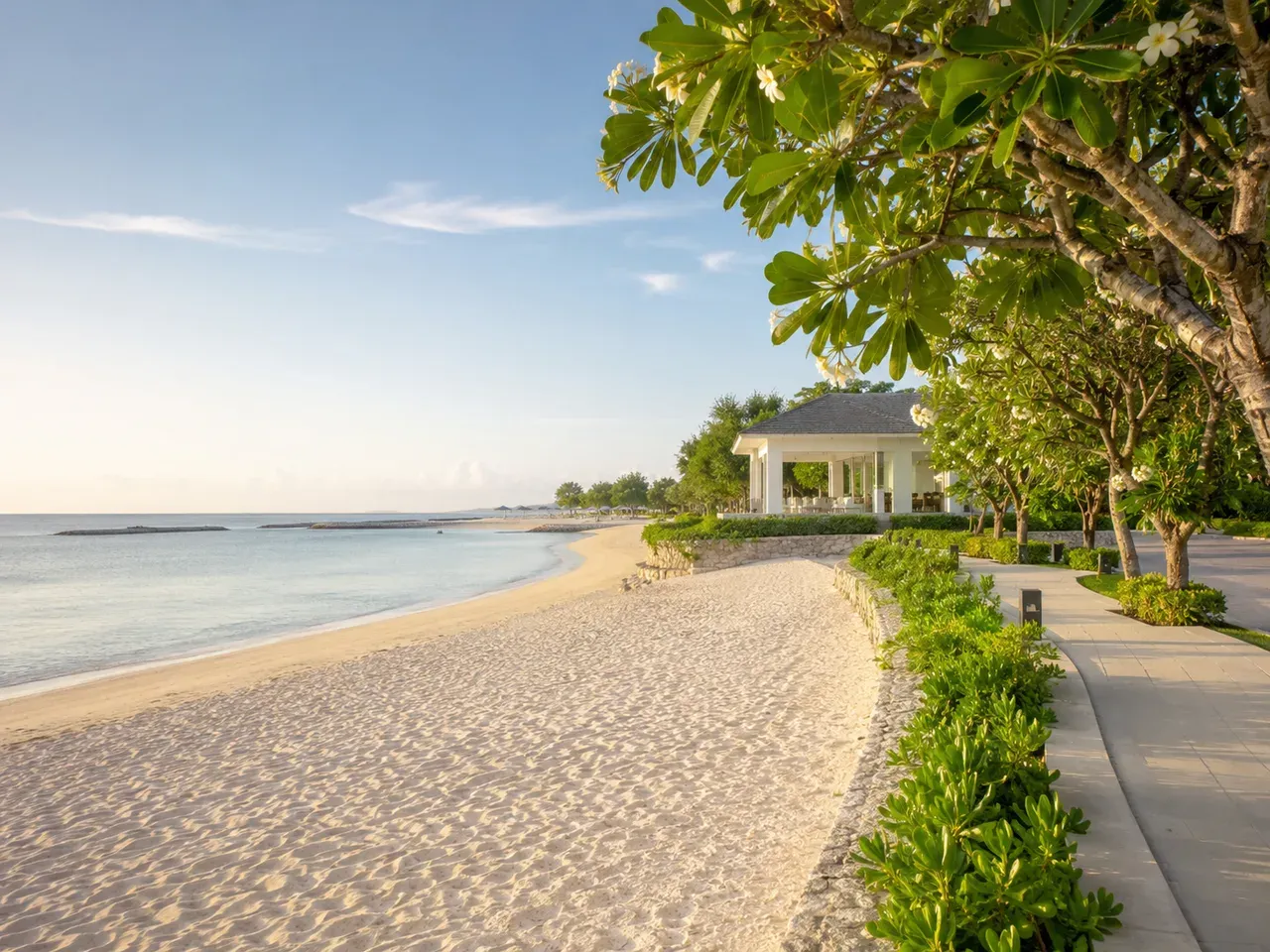
What does Ungasan offer that Nusa Dua cannot?
Elevation. Ungasan occupies the southern clifftops of the plateau, above Melasti Beach and the coves that host destination beach clubs such as Karma and Sundays. Where Nusa Dua's coast is flat and manicured, Ungasan looks down at the Indian Ocean from the top of a limestone wall. This is the classic Bukit view.
The district has matured into the peninsula's quiet premium residential zone: gated compounds, landscaped streets, newer builds, and noticeably less traffic than the west coast. It suits owners who want privacy and a view first, and a scene second.
One caution that buyers discover late. Parts of the Ungasan and Pecatu plateau historically depended on trucked-in water rather than a reliable mains supply. Any serious project here must engineer its own answer, with dedicated wells, storage and filtration, before the architecture matters. It is one of the reasons we treat independent water supply and filtration as a construction standard, and why what a tropical climate does to a building is worth reading before any viewing.
Is Uluwatu a good place to buy, or just a good place to surf?
Uluwatu, together with Bingin and Padang Padang, is the west coast of the plateau: the temple, the surf breaks, the cliff-edge beach clubs, and the strongest international name recognition on the peninsula. Pecatu, the village in the middle of the plateau, straddles the two worlds, part residential hinterland and part gateway to the western beaches. Demand on this coast is real and global.
It is also the least regulated part of the Bukit. Land is open-development rather than estate-managed, micro-locations vary street by street, and cliffline construction is governed by setback rules under Bali's regional spatial plan that are now actively enforced: in 2025 the authorities sealed and demolished dozens of non-compliant structures on the Bingin clifftop. Building approvals (PBG) and the final fitness certificate (SLF) deserve particular scrutiny on any cliff-adjacent parcel, and the water question applies here with full force.
None of this makes Uluwatu a poor choice. It makes it a choice that rewards diligence. The buyers who do well here verify zoning at parcel level, insist on documented permits, and work with builders who can prove how the structure handles the cliff environment. We build on both sides of the plateau, Ardhana and Bloom on the Bukit as well as the Nusa Dua projects, so the water and permit questions above are operational for us, not theoretical.
How should you choose between them?
Nusa Dua | Ungasan | Uluwatu & the west coast | |
|---|---|---|---|
Character | Master-planned resort enclave, composed by design | Quiet clifftop residential, gated and private | Surf-driven and social, the strongest global name |
Coastline | Reef-protected, gently sloping, swimmable | Clifftop coves above Melasti | Cliffs and world-class breaks |
Airport access | Toll road, a reliable twenty minutes | Surface roads, forty-five minutes and up | Surface roads, season- and hour-dependent |
Infrastructure | Estate-grade water, power, drainage and fibre | Maturing; water must be engineered per project | Varies street by street; verify per parcel |
Regulation | Documented and enforced estate zoning | Established residential zoning | Open development; setback rules actively enforced |
Suits owners who want | Operator standards, order, family beaches | Privacy, views, quiet ownership | Energy, brand recognition, the surf scene |
Ask three questions in order:
- How will the property be run? If the answer involves an international operator or a professional management standard, the district must satisfy the operator's requirements for infrastructure, access and legal clarity. That logic pulls toward Nusa Dua and the established parts of Ungasan.
- What does the land actually come with? Mains water or trucked water; documented zoning or assumption; an enforced estate plan or open land. The same view can sit on very different foundations.
- Who do you want as neighbours in ten years? A master-planned estate will look in a decade roughly the way it looks now. Open-development coast will not, for better and for worse.
The Bukit rewards buyers who match the district to their holding plan instead of chasing the most photographed cliff. Once the district is chosen, the next decision is legal: which ownership structure a foreigner can hold in Bali. For the wider island context, see the case for Bali.
If you are still weighing the format, compare a villa, an apartment and a hotel room.
Lanjutkan membaca
Bali Real Estate Investment: The Best Areas to Buy Property in 2026
Leasehold vs Freehold in Bali: Which Should Foreign Investors Choose?