
Branded residences in Bali: what an international operator changes, and what it demands
A hotel brand on a residence is not a badge. It is a contract that governs how the building is designed, built, staffed and maintained for decades — and it binds the owner as well as the developer.
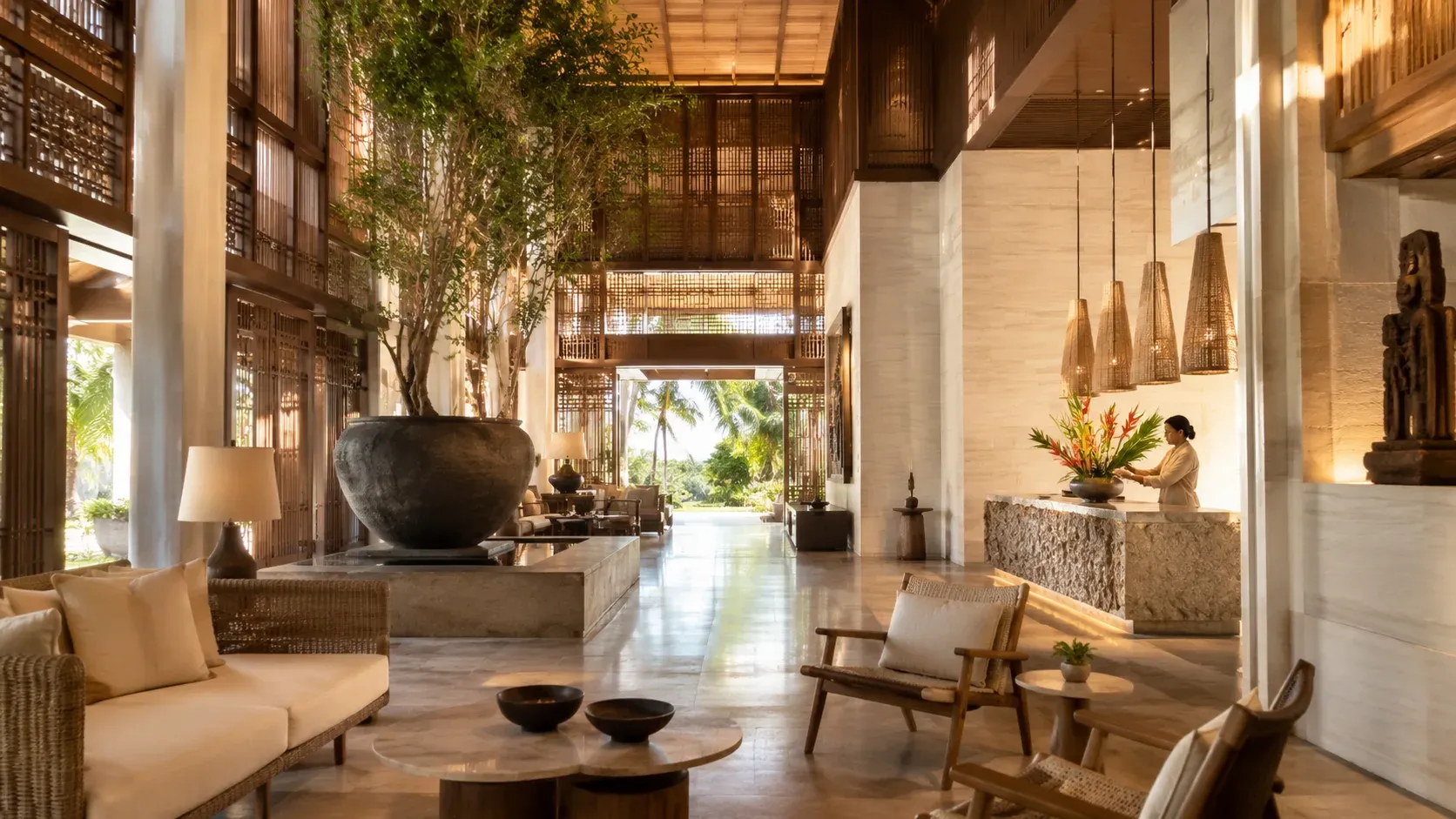
A branded residence is a home that operates inside a hotel group's system: designed to the brand's technical standards, audited during construction, and run after handover to the same service standard as the group's hotels. The brand's name is the visible part. The substance is a set of long-term contracts that discipline everyone involved, developer, operator and owner alike, for decades. That discipline is what buyers are choosing, and it cuts both ways.
What is a branded residence, concretely?
Strip away the marketing and a branded residence is three agreements stacked together. A licence lets the development carry the brand's name. A technical-services agreement gives the brand review and approval over the architecture, engineering and interiors before and during construction. A management arrangement governs how the property is operated after completion: reservations, staffing, maintenance, guest experience, all to the group's published standards.
The category grew out of the global hotel groups and they still account for most of it, because the model works best when the name on the door and the team behind the desk answer to the same system. Each group maintains internal standards manuals covering structure, fire and life safety, engineering systems, back-of-house layout and maintenance cycles. Developers see them; the public does not.
Agreement | What it governs | Where the answer lives |
|---|---|---|
Brand licence | The right to carry the name, and the conditions of losing it | The licence between brand and developer |
Technical services agreement | Design review, construction audits, engineering standards | The brand's standards manuals, applied to the project |
Management arrangement | Staffing, maintenance, reservations and service after handover | The management agreement, including its term and renewals |
House rules and budget | What owners may alter, how use and letting work, how upkeep is funded | The owner documents attached to the purchase |
Why would an owner want a hotel group involved in their home?
Four things change materially when an established operator stands behind a residence:
- The building is audited, not just marketed. Brand technical teams review the design before construction and inspect during it. A developer cannot value-engineer beneath the render, because a second, experienced party with veto power is looking.
- Maintenance stops being optional. Hotel standards enforce upkeep on a schedule, which is the discipline that decides whether a tropical building looks better or worse after its first decade. Owners of independent villas carry that burden alone, and most defer it.
- Management is institutional. Global reservation systems, trained staff, professional housekeeping and engineering. Performance stops depending on one villa manager's phone.
- Verification a distant buyer can rely on. An operator's involvement is a form of inspection the buyer does not have to perform in person, and it is legible to the next buyer for the same reason, which widens the future audience for the property.
What does the owner give up?
An honest account includes the other side of the ledger. Brand standards constrain the owner as well as the developer. What you may alter inside your own residence, how and when you may occupy it personally, how it may be let and by whom, are all governed by the agreements, and refurbishment cycles arrive on the operator's schedule, funded by owners collectively. The house rules exist to protect every owner's asset from any one owner's taste, and that is exactly how they feel from the inside. A buyer who wants full freedom over their property should own an independent villa and accept the obligations that come with the freedom. A branded residence trades autonomy for enforced standards; the trade is the product.
How a hotel room, an apartment and a villa compare on control and personal use is set out in villa, apartment or hotel room.
What does the operator demand from the developer?
This is the part buyers rarely see. Before a residence may carry an international flag, the developer must satisfy the operator's technical services review: structure, fire and life safety, mechanical and electrical systems, acoustics, back-of-house logistics, staff areas, service circulation. The audits continue through construction, and a project that fails them does not open under the brand.
HQC is the only foreign developer building under the Accor brand on Bali. The portfolio spans three global hotel groups: Satori executed to Accor standards in Nusa Dua, Ardhana under Wyndham hospitality standards on the Bukit, and Bloom, BY Radisson Individuals. Three operators reviewed three of our projects against three different standards manuals, and we had to satisfy each separately. The construction decisions that follow from that are described in the quality system.

What should a buyer examine before trusting the brand?
The brand is the beginning of diligence, not the end of it, and each question below has a specific document that answers it:
- Who actually operates the building? Sometimes the brand manages directly; sometimes a separate operator runs the property under licence. The answer is in the management agreement, not the brochure.
- For how long? Management arrangements run for defined terms measured in decades. The term and its renewal mechanics are the real duration of the promise.
- What exactly do the standards govern? The technical-services agreement and the house rules bind design, staffing, maintenance and refurbishment cycles. An owner should understand what is enforced, because that enforcement is what they are paying for.
- How are services funded after handover? Shared facilities and staff live inside an operating budget that owners contribute to. The service and reserve arrangements say how; read them before signing, not after.
The same vetting logic that applies to any developer applies doubly here, and the due-diligence checklist covers it step by step.
Branded or independent: how to decide
An independent villa offers freedom: your design, your management choices, your schedule. A branded residence offers system: enforced standards, institutional operation, and a name that carries trust to people who have never seen the building. Neither is universally right. The honest test is which set of obligations you would rather hold, because both come with obligations. For owners who live thousands of kilometres from their property, the operator's manual usually wins that comparison.
If you choose an independent manager instead, villa management and rental licences lists what to check in the agreement.
The full portfolio, branded and independent, is at projects.
Continue reading

Villa vs Apartment vs Hotel Room: Which Bali Property Format Fits Your Investment?

Villa Management in Bali: Rental Licences, Management Models and What Owners Should Check