
Villa vs Apartment vs Hotel Room: Which Bali Property Format Fits Your Investment?
Villa, apartment or hotel room? How the three Bali property formats differ in control, personal use, management and resale, and which one suits your plans.

In the villa vs apartment choice in Bali, a villa gives the most control and personal use but the most to manage. An apartment has the lowest entry point and the simplest upkeep, in a small market with few comparable sales. A hotel room in an operator-run resort is the most hands-off: the hotel brand runs it and you give up most day-to-day control. The right format depends on how much you want to manage and how you plan to use the property.
What are the three formats, exactly?
Most property sold to international buyers in Bali falls into three formats. They differ less in bricks and mortar than in who controls the asset once it is finished.
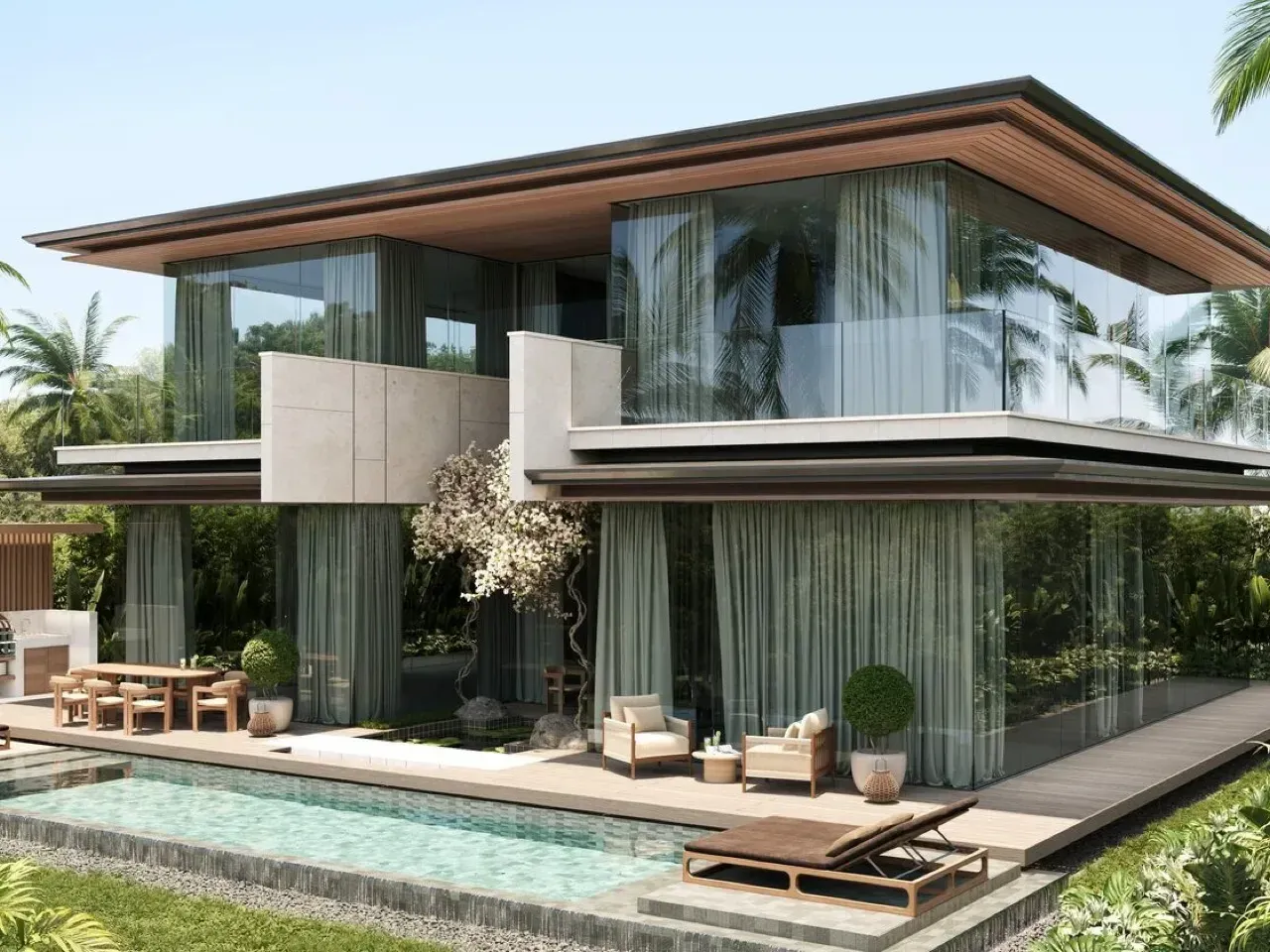
- Villa: a standalone house on its own plot, usually with a private pool, held on a lease (leasehold) or, for a business, through a foreign-owned company (PT PMA) holding a building-use right (HGB), never as freehold in a foreigner's name. It is run by the owner, by a management company the owner chooses, or by a resort operator if the villa sits inside a branded resort.
- Apartment: a unit in a multi-storey building, held under a strata-type title or a long lease, with the common areas run by the building's management body.
- Hotel room or condotel: a key inside a hotel or resort, sold to an individual investor but operated as part of the hotel's inventory by a hotel operator, usually through a rental pool and a management agreement.
Before comparing formats, check what legal right you are actually buying. Foreigners cannot hold Hak Milik (freehold) land in Indonesia. Most foreign purchases in Bali are leasehold or Hak Pakai, and our guide to leasehold vs freehold in Bali explains what each one gives you.
Villa: what do you gain and what do you take on?
A villa is the format most buyers picture when they think of Bali, and the island's visitor base supports it: nearly 7 million foreign visits were recorded in 2025, according to Statistics Indonesia (BPS) Bali. What a villa offers above all is control:
- You decide when you stay, how the villa is finished and furnished, and whether it is rented out at all.
- You choose, and can replace, the management company.
- The plot and the private pool are yours to use for the whole lease term, and a well-located villa appeals to a wide pool of resale buyers, from lifestyle owners to investors.
What you take on is the operating burden. A villa rented to short-stay guests is a licensed tourism business in Indonesia, not a private home. As of 2026 it needs correct zoning, a building approval (PBG), a certificate of function (SLF) and a business number under the right villa code, and the Ministry of Tourism has been pushing booking platforms to list only licensed properties.
The tropical climate also takes its toll. Roofs, waterproofing, pumps and pools need a maintenance budget and someone on the island who keeps to it. Our guide to villa management and rental licences in Bali covers the permits and the manager's role, and what the tropical climate does to buildings explains why construction quality decides your maintenance bill.
After the floods of September 2025, Bali's governor announced an end to permits for hotels, restaurants and similar commercial facilities on productive farmland. Provincial Regulation 4 of 2026, signed in February 2026, now restricts converting productive land and bans nominee ownership, with criminal penalties for converting protected rice land into villas. A villa on correctly zoned land, held through a legal structure rather than a nominee, is becoming a scarcer asset, so check both the zoning and the ownership structure.
There is also a middle path: a villa inside an operator-run resort. You keep a private house and pool, but the operator runs rentals and upkeep to its brand standard, and your control and personal use then follow the management agreement, as they would for a hotel room.
Apartment: when does it make sense in Bali?
Among the three formats, an apartment has the lowest entry point and the lightest upkeep. The statutory minimum purchase value for foreigners is lower for an apartment than for a house (Kepmen ATR/BPN 1241/2022), and the building's management body handles the roof, the facade, security and shared facilities, so you pay a service charge instead of organising repairs yourself. That makes the apartment the easiest format to own from abroad if you do not want to run anything.
An apartment's trade-offs are structural. Under Government Regulation 18 of 2021, a foreigner with valid immigration documents may own a residential apartment unit under strata title (Hak Milik atas Satuan Rumah Susun), subject to conditions on the zone the building stands in, a minimum purchase value and residential use. Buildings in Bali usually stand on HGB land, and HGB can only be held by Indonesians or Indonesian companies. It runs for up to 30 years, can be extended by up to 20 and then renewed for up to 30 more. A foreign owner on HGB land owns the unit and a share of the common building, but not a share of the land under it. A ministerial decree of 2022 also sets a minimum purchase value for foreigners buying an apartment in Bali, so the cheapest units in the market are not open to foreign buyers. We explain strata title in more detail in what a foreigner can own in Bali.
Supply is the other constraint. Bali is a low-rise island, and outside a few areas buildings are limited in height, so the apartment market is small next to the villa market. A smaller market can mean fewer comparable sales when you come to resell, so ask how units in the same building have resold before you buy.
Hotel room or condotel: how does operator-run ownership work?
In this format you own a key inside a hotel or resort, and a hotel operator runs it as part of the hotel. Your unit usually joins a rental pool: the operator sets rates, sells the rooms through its booking channels and loyalty programme, keeps the room to brand standard and pays owners a share of the pooled income under the management agreement. For you, it is the most hands-off form of property ownership in Bali.
What you give up is control. The operator decides room rates and availability, owner stays usually have to be booked ahead within an allowance, and existing guest bookings can take priority over the owner. We set out what a brand operator changes, and what to ask for in the contract, in our article on branded residences in Bali.
The legal wrapper matters more here than in any other format. In 2022 Indonesia's Constitutional Court rejected a petition by condotel owners (decision 62/PUU-XX/2022), reasoning that a condotel has a business function and so falls outside the Apartment Law, the law under which strata certificates are issued. In January 2026 (decision 198/PUU-XXIII/2025) the Court recognised this gap and gave lawmakers two years to regulate non-residential units such as condotels. This matters for foreign buyers in particular: the rules that let a foreigner own an apartment unit apply to residential property, and a hotel room is not residential. As of 2026, therefore, there is no dedicated condotel statute, and hotel units are usually sold through a project-specific structure, most often a long lease of the unit combined with a management agreement. The label "condotel" tells you little. The documents tell you what you actually own.
Villa vs apartment vs hotel room in Bali: side by side
The table compares the three formats in general terms. The details depend on the specific project and its agreements.
Factor | Villa | Apartment | Hotel room / condotel |
|---|---|---|---|
Control over the property | Highest: you decide use, finish and manager (less inside an operator-run resort) | Medium: your unit is yours, common areas are shared | Lowest: the operator runs the room as hotel inventory |
Personal use | Unlimited, if you choose not to rent | Flexible, within building rules | Limited: booked ahead within an owner allowance |
Who manages it | You, a manager you appoint, or a resort operator if the villa sits inside a branded resort | Building management body plus your own rental agent | The hotel operator under a management agreement |
Operating standard | Depends on your manager | Depends on the building and your agent | Set and audited by the hotel brand |
Maintenance burden | High: the whole house, pool and garden | Low: your interior, plus a service charge | Lowest: handled by the operator from a reserve |
Resale buyer pool | Wide: lifestyle buyers and investors | Narrower: a small, niche market | Investors who want a managed asset |
Which format suits which investor?
The lifestyle buyer wants to spend real time in Bali and have the property earn when they are away. A villa fits best: full personal use, a private pool, and a manager to run rentals in between. Choose the location as carefully as the house. Our guide to the best areas to buy property in Bali compares the main districts.
The cautious buyer wants a clear title and as little day-to-day involvement as possible. An apartment in a well-run building, or a hotel room under an international operator, keeps the owner's workload small. The due diligence then focuses on the title chain and the management documents. The Bali property due diligence checklist sets out what to verify.
The return-focused investor looks at the property as an operating asset. A hotel room under an international operator gives brand standards and global distribution without owner effort. A well-managed villa in a strong location gives more control over rates and resale. Either way, judge the operator, the location and the build quality, not the projections in a brochure.
How HQC's portfolio spans the formats
HQC builds two of the three formats, villas and operator-run hotel rooms, and in two projects both sit at the same address. Across seven complexes, including Pandawa (currently in design), the portfolio totals 814 units. Design, construction, engineering (MEP) and furniture production are handled in-house, and operations are run by international hotel operators or a professional management company, depending on the project.
- Satori, Nusa Dua: 116 hotel rooms and 38 villas in one resort, all operated by Accor, so a buyer can choose between a hotel room and a private villa, both under the same operator. Construction is in progress, with completion planned for Q3 2027.
- Ardhana, Ungasan: villa quarters where construction was completed in June 2025 (now available only on resale), plus the Smart quarter, a boutique hotel of compact apartment-style keys operated by Wyndham under a signed management agreement and planned for completion in Q3 2028.
- Bloom, BY Radisson Individuals, Melasti: an adults-only design hotel with 103 keys, a fully operator-run format planned for completion in Q1 2028.
- Aravita, Nusa Dua: a gated community of villas in a Japandi style, planned for completion in Q2 2028.
- Dzen Green Fields, Ubud, and Black Rock, Ungasan: villa complexes where construction is completed. Black Rock is managed by Farsight and has been operating since August 2024.
Whichever format you choose, every HQC building carries a 10-year structural guarantee and a 12-month finishing guarantee. You can read how we build and test for Bali's climate on our quality page.
Frequently asked questions
Is it better to buy a villa or an apartment in Bali?
A villa is better if you want personal use, control and a wide resale market. An apartment is better if you want the lowest entry point and the least upkeep. In Bali, the villa market is much larger and more liquid, while apartment supply is limited by low-rise planning rules.
Can you buy a hotel room in Bali as an investment?
Yes. Several resorts sell individual hotel rooms to investors, who then place them with the hotel operator under a management agreement, usually in a rental pool. As of 2026 there is no dedicated condotel law in Indonesia, so the ownership structure and the management agreement must be reviewed for each project.
What is a condotel and how does it work in Bali?
A condotel is a hotel unit sold to an individual owner and run by a hotel operator as part of the hotel. The operator rents it to guests, maintains it to brand standard and shares the pooled income with owners under the agreement. Indonesia's Constitutional Court placed condotels outside the Apartment Law in 2022 and in January 2026 gave lawmakers two years to regulate them.
Which Bali property type is easiest to manage from abroad?
A hotel room under an international operator is the easiest, because the operator handles guests, staff, maintenance and reporting. An apartment in a well-run building comes next. A villa needs the most attention, even with a manager, because licensing, maintenance and rental performance depend on the choices you make.
Which property format gives the most personal use in Bali?
A villa does. As the owner you can stay whenever you like, and renting it out is your choice. Hotel-room owners usually get a limited number of nights, booked in advance, and guest bookings may take priority.
Do apartments in Bali hold their value?
Well-managed apartments in strong locations generally do; weakly managed ones often do not. Bali's apartment market is small, so the building, its management and the time left on the land title matter more than the format itself. Before you buy, ask how other units in the same building have resold and how many years remain on the HGB.
If you are weighing a villa against a hotel room, the quickest way to decide is to compare real documents and real buildings. Talk to the HQC team or browse the projects to see which format each project offers, and read why investors choose HQC.
Continue reading

Villa Management in Bali: Rental Licences, Management Models and What Owners Should Check
Branded residences in Bali: what an international operator changes, and what it demands